

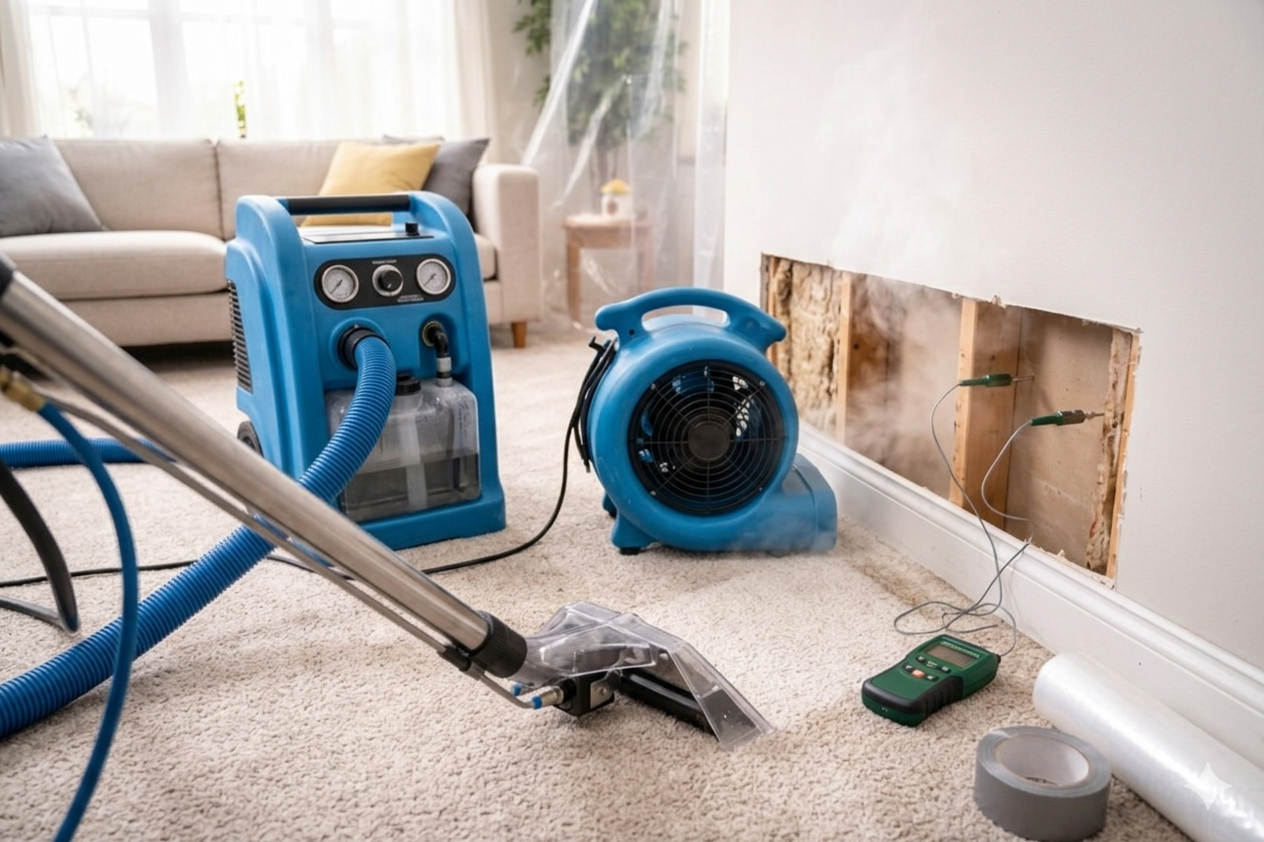
Professional Drying for Wet Walls, Floors, Concrete, Subfloors & Building Materials
Structural Drying Melbourne – Water Damage & Moisture Removal
Water can disappear from the surface while remaining trapped deep inside walls, floors, concrete, timber, insulation and other building materials.
Superbclean provides professional structural drying in Melbourne for homes, businesses, rental properties and commercial buildings affected by flooding, burst pipes, roof leaks, appliance failures and other forms of water damage.
Our structural drying process is designed to identify hidden moisture, remove excess humidity and create controlled drying conditions using professional moisture detection equipment, air movers and commercial dehumidifiers.
If your property has wet walls, soaked flooring, damp concrete, a wet subfloor or hidden moisture after a leak or flood, professional drying can help reduce the risk of ongoing damage and mould growth.
Call Superbclean on 0413 727 860 for professional structural drying across Melbourne.
What Is Structural Drying?
Structural drying is the professional process of removing absorbed moisture from a building after water damage.
Unlike surface drying, structural drying focuses on water that has travelled into materials such as plasterboard, timber framing, flooring, concrete slabs, ceilings, insulation and subfloor areas.
After a flood or leak, a room can appear dry even while significant moisture remains inside the building. That hidden moisture may continue affecting materials long after standing water has been removed.
Professional structural drying combines moisture assessment, controlled airflow and dehumidification to encourage water trapped within building materials to evaporate and be removed from the indoor environment.
Structural Drying Melbourne After Water Damage
Structural drying is often required after:
- Burst or leaking pipes
- Storm and rainwater ingress
- Flooding
- Roof leaks
- Overflowing baths, sinks or toilets
- Washing machine and dishwasher leaks
- Hot water system failures
- Water underneath flooring
- Wet walls and ceilings
- Flooded carpet and underlay
- Commercial water damage
- Hidden moisture discovered after an earlier leak
Superbclean can assess the affected materials and establish an appropriate drying approach based on the amount of water, the materials involved and how far the moisture has travelled.
If your property has significant flooding or standing water, see our flood restoration services in Melbourne.
Why Hidden Moisture Matters
The water you can see is not always the water that causes the longest-lasting problems.
Building materials absorb and transport moisture in different ways. Water can wick upward through plasterboard, move underneath timber or floating floors, soak into concrete, enter wall cavities and remain trapped beneath carpet or underlay.
If moisture is left inside building materials, it can contribute to:
- Mould and microbial growth
- Musty or damp odours
- Swelling or warping of timber
- Damage to plasterboard and paint finishes
- Flooring adhesive failure
- Corrosion of metal components
- Damage to insulation and other absorbent materials
- Longer restoration times and more extensive repairs
This is why professional water damage drying should focus on the complete moisture footprint rather than only the visible wet area.
Our Structural Drying Process
1. Moisture Assessment
We begin by assessing the affected area and determining where moisture may have travelled.
Moisture detection equipment helps identify materials that remain wet even when they feel dry to the touch.
The assessment helps us determine which areas require drying and what equipment is appropriate for the job.
2. Water Extraction Where Required
If standing water or heavily saturated carpet and flooring are still present, excess water should be extracted before structural drying begins.
Removing bulk water first makes the controlled drying process more effective and reduces the amount of moisture that must be removed through evaporation and dehumidification.
3. Controlled Air Movement
Professional air movers are positioned to increase airflow across wet surfaces and encourage evaporation from affected building materials.
The placement of equipment depends on the layout of the property, the materials involved and where moisture has been detected.
4. Professional Dehumidification
As water evaporates from wet building materials, that moisture enters the surrounding air.
Commercial dehumidifiers remove this water vapour from the environment, helping maintain conditions that encourage continued drying rather than allowing moisture to be reabsorbed into surrounding materials.
Depending on the project, different types of dehumidification equipment may be used to suit the drying conditions.
5. Moisture Monitoring
Structural drying should not be based simply on how a wall, floor or room looks.
Moisture readings can be monitored during the drying process to assess progress and determine whether equipment placement or drying conditions need to be adjusted.
6. Final Drying Assessment
Once drying has progressed, affected materials can be reassessed to determine whether they have reached an appropriate dry condition.
The goal is to address moisture within the building materials, not merely to make the surface appear dry.
Wet Wall Drying Melbourne
Water can enter walls from burst pipes, roof leaks, flooding, bathrooms, plumbing failures and water travelling from adjoining rooms.
Plasterboard can absorb water beyond the visible stain, while moisture can also remain inside wall cavities, timber framing and insulation.
Superbclean provides wet wall drying in Melbourne using moisture assessment, airflow and professional dehumidification.
Whether a wet wall can be dried or needs partial replacement depends on factors such as the type of material, level of saturation, water source, how long it has remained wet and whether the material has physically deteriorated.
Wet Floor & Subfloor Drying Melbourne
Water frequently travels underneath visible floor coverings.
Carpet, underlay, timber floors, laminate, floating floors and subfloor materials can retain moisture after the surface appears dry.
A wet subfloor can also be difficult to ventilate naturally, allowing damp conditions to persist underneath the occupied area of a building.
Our subfloor drying and floor drying services focus on identifying trapped moisture and creating suitable drying conditions for the affected materials where restoration is practical.
Concrete Drying Melbourne
Concrete is porous and can hold moisture after flooding, plumbing leaks or prolonged water exposure.
A concrete slab may appear dry on the surface while still releasing moisture from deeper within the material.
This can become particularly important before new carpet, timber, vinyl or other floor finishes are installed because excessive slab moisture can affect adhesives and finished flooring.
Superbclean can assist with concrete drying in Melbourne as part of a broader structural drying and water damage restoration process.
Timber Floor & Timber Structure Drying
Timber absorbs moisture and may swell, cup, warp or change dimension after water exposure.
Early moisture assessment and controlled drying can help determine whether affected timber flooring or structural timber can be retained.
We can assess wet timber and surrounding materials and establish a professional drying setup where drying in place is appropriate.
Heavily damaged, contaminated or physically deteriorated materials may still require removal or replacement.
Ceiling & Roof Leak Drying
Roof leaks and plumbing failures above a ceiling can allow moisture to spread through plasterboard, insulation, timber and ceiling cavities.
The visible stain may represent only part of the affected area.
Professional assessment can help determine how far the water has travelled and whether the ceiling and surrounding building materials can be dried safely.
If a roof or plumbing defect caused the water damage, the source should also be repaired before the drying process can be completed successfully.
Professional Dehumidification Melbourne
Dehumidification is one of the key components of structural drying.
Household dehumidifiers are designed primarily for comfort and everyday humidity control. Water-damaged buildings can contain far more moisture than domestic equipment is designed to manage.
Commercial drying equipment is used to control humidity while moisture is being released from wet building materials.
Superbclean uses professional dehumidification together with controlled air movement to create more effective drying conditions after water damage.
Why Fans Alone May Not Be Enough
A household fan can move air across a wet surface, but it does not remove the moisture that evaporates into the room.
In a heavily water-damaged property, uncontrolled airflow without sufficient dehumidification can simply redistribute humid air and may not address moisture trapped deeper inside structural materials.
Professional structural drying combines airflow, humidity control and moisture monitoring so the drying environment can be managed rather than guessed.
Residential Structural Drying Melbourne
Superbclean provides structural drying for Melbourne homes affected by leaks, floods and water damage.
Common residential areas requiring drying include:
- Bedrooms and living rooms
- Kitchens and laundries
- Bathrooms
- Garages
- Basements and lower levels
- Wet wall cavities
- Timber and concrete floors
- Carpet and underlay
- Ceiling spaces
- Subfloors
We work with homeowners, landlords, tenants and property managers to assess affected areas and establish an appropriate drying process.
Commercial Structural Drying Melbourne
Water damage inside a commercial building can disrupt staff, customers, stock and normal operations.
Superbclean provides commercial structural drying in Melbourne for offices, retail spaces, warehouses, rental properties and other commercial premises.
Larger buildings may require multiple air movers and dehumidifiers, moisture monitoring across different areas and a drying setup designed around access and operational requirements.
Our aim is to remove moisture efficiently while helping minimise unnecessary disruption to the property.
Structural Drying After a Burst Pipe
A burst pipe can release a large volume of water into walls, flooring and adjoining rooms before the water supply is isolated.
After the pipe has been repaired, professional drying may still be required because water can remain underneath flooring, inside wall cavities and within absorbent building materials.
Superbclean can carry out water extraction where required, assess the moisture spread and establish a structural drying process for affected areas.
Structural Drying After Storms & Heavy Rain
Melbourne storms and heavy rain can cause water to enter properties through roofs, windows, doors, garages, balconies, drainage failures and other openings.
Once the source of the water has been addressed, drying the affected structure is important because rainwater can spread far beyond the obvious entry point.
Our structural drying service can assist with moisture in floors, walls, ceilings and other building materials following storm-related water damage.
Structural Drying for Insurance & Property Management
Water damage restoration often involves insurers, landlords, owners corporations or property managers.
A professional drying process provides a clearer picture of which areas have been affected and what work is required to return materials to an appropriate dry condition.
Superbclean can provide relevant restoration information and moisture-related documentation where required as part of the job.
Areas We Service Across Melbourne
Superbclean provides structural drying and water damage restoration across the Melbourne metropolitan area.
We assist properties in Melbourne CBD and across the inner, eastern, western, northern, south-eastern and bayside suburbs.
If you are unsure whether we service your location, call 0413 727 860 and tell us where the water damage has occurred.
Why Choose Superbclean for Structural Drying?
- Water damage experience: Structural drying is part of our broader flood and water damage restoration work.
- Professional drying equipment: We use commercial air movers, dehumidifiers and specialist drying equipment according to the requirements of the job.
- Moisture detection: We assess moisture beyond the obvious wet surface to help identify hidden water.
- Residential and commercial capability: We assist homes, rental properties and commercial premises.
- Targeted drying: Drying equipment is selected and positioned according to the affected materials and moisture conditions.
- Ongoing assessment: Moisture levels can be checked during the drying process to assess progress.
- Related flood restoration services: Where water extraction and broader restoration are required, we can manage those stages as part of the job.
Frequently Asked Questions About Structural Drying
What is structural drying?
Structural drying is the controlled removal of moisture that has been absorbed into building materials after a flood, leak or other water-damage event. It commonly involves moisture assessment, air movement and professional dehumidification.
What is the difference between water extraction and structural drying?
Water extraction removes liquid water, while structural drying removes moisture absorbed into building materials. Many water-damage jobs require both. Extraction usually happens first, followed by drying and moisture monitoring.
How long does structural drying take?
Drying time depends on the amount of water, type of building materials, how long the property was wet, environmental conditions and how deeply moisture has travelled.
Some smaller areas may dry relatively quickly, while heavily saturated floors, concrete, walls or subfloors can take several days or longer. The most reliable way to determine completion is by assessing moisture rather than relying on a fixed number of days.
Can you dry wet walls without removing them?
Sometimes. Whether plasterboard and wall systems can be dried in place depends on the condition of the materials, source of the water, level of saturation and whether moisture can be effectively removed from the wall cavity.
Can a wet concrete slab be dried?
Yes, concrete can be professionally dried, although it may release moisture slowly because of its density and porosity. Drying time depends on the extent and duration of water exposure and the surrounding conditions.
Can you dry a wet subfloor?
In many situations, yes. Subfloor drying may require targeted airflow and dehumidification because moisture can become trapped underneath flooring where natural ventilation is limited.
Can timber flooring be saved after water damage?
It depends on the timber, amount of water, contamination level, duration of exposure and the amount of swelling or physical damage. Early assessment and controlled drying can improve the chance of retaining suitable materials.
Why does my wall or floor still smell damp?
A persistent damp or musty smell can indicate that moisture remains inside carpet, underlay, flooring, walls or other materials even if the visible surface appears dry.
Do I need structural drying after a small leak?
Not every small leak requires a large drying setup, but even a relatively small amount of water can travel into hidden areas. If flooring, walls, cabinetry or other absorbent materials became wet, a moisture assessment can help determine whether professional drying is necessary.
Can structural drying help prevent mould?
Structural drying helps reduce the damp conditions that support mould growth by removing excess moisture from affected materials and the surrounding environment.
Do you provide structural drying for commercial properties?
Yes. Superbclean provides structural drying for residential and commercial properties throughout Melbourne.
Need Structural Drying in Melbourne?
If your property has wet walls, damp flooring, a soaked subfloor, wet concrete, timber water damage or hidden moisture after flooding or a leak, don’t assume the structure is dry simply because the visible water has disappeared.
Superbclean provides professional structural drying, moisture detection, dehumidification and water damage drying throughout Melbourne.
Call Superbclean now on 0413 727 860 for a free, no-obligation quote.