

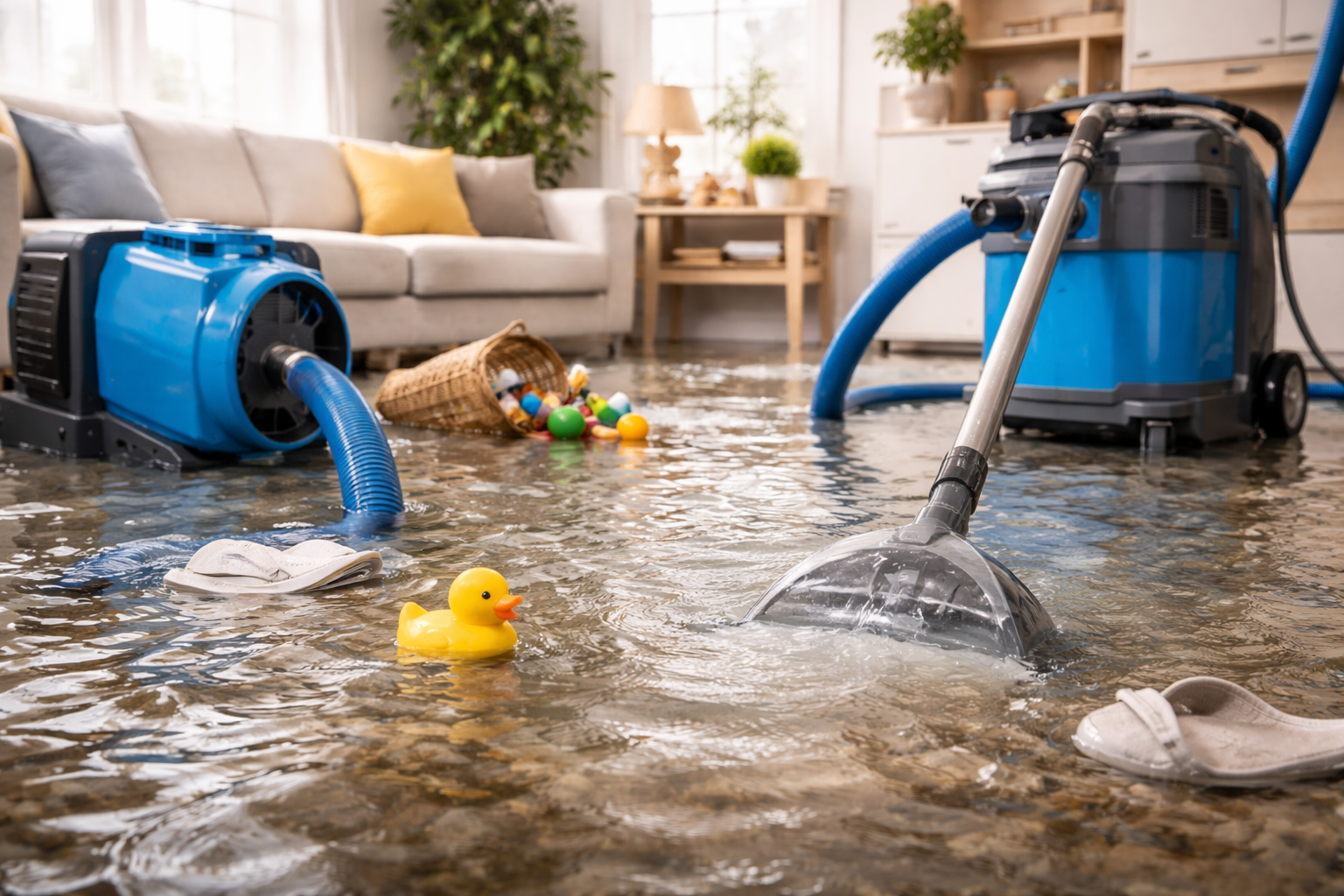
Flood restoration starts with safety, stopping the source of water and removing standing water. It continues with assessing affected materials, controlled structural drying and checking that moisture levels are suitable before repairs. A carpet that looks dry does not mean its underlay, skirting boards or subfloor are dry.
For homeowners, property managers and businesses in Melbourne’s west, this is what the process usually involves and what to document after a burst pipe, appliance overflow, roof leak or storm-related water entry.
First: make the property safe and contact the right people
- Do not enter unsafe floodwater. Stay away from potential electrical hazards, damaged structures and contaminated water.
- Stop the source if it is safe to do so, for example by turning off the mains water after a burst pipe.
- Contact emergency services if there is an immediate threat to life, structural stability or public safety.
- Tell your insurer early. Ask about evidence requirements and approval for emergency works. Photograph accessible damage before moving items where practical.
- Arrange an assessment. Explain whether the water came from a clean supply pipe, an appliance, roof runoff, an external flood or sewage. That distinction affects what can be salvaged.
The Australian Financial Complaints Authority’s flood and storm guidance advises prioritising safety, contacting your insurer promptly and recording the damage.
Step 1: Inspect, identify the water source and map the damage
A restoration assessment looks beyond the visible puddle. Moisture can track beneath carpet, into floor edges, behind skirting boards and through porous wall materials. Where suitable, technicians use moisture meters and other inspection tools to establish which areas require attention.
Thermal imaging can help identify patterns consistent with moisture, but a thermal camera does not directly measure moisture or confirm the source of a leak. Readings and visual inspection are needed to interpret the findings.
Step 2: Remove standing water as early as safely possible
High-capacity extraction can remove free water from hard floors and suitable carpets far more efficiently than towels or household equipment. The required method depends on the floor covering, accessibility and whether the water is contaminated.
Do not assume every flooded carpet can be saved. Sewage or outside floodwater, prolonged saturation, mould and damage to backing or underlay can make removal the safer option. Clean-water incidents caught early may offer more salvage options, but every job needs assessment. See our wet carpet salvage guide.
Step 3: Dry structures, not just visible surfaces
Once free water is removed, restoration may require carefully positioned air movers, commercial dehumidifiers and access to affected cavities or subfloor areas. Their purpose is to move moisture out of wet materials while controlling indoor humidity. Equipment should be selected and monitored for the job rather than installed blindly.
Drying time is not guaranteed to be 48 or 72 hours. It depends on construction, temperature, humidity, material condition and the amount of water present. Some porous materials cannot be successfully dried or cleaned and need removal. Learn more about Superbclean’s structural drying service.
Step 4: Check moisture levels before rebuilding
Before replacing skirting, reinstalling floor coverings or painting affected surfaces, confirm that damp materials have been assessed. Sealing a wall or floor too early can conceal moisture and create additional problems. Proper documentation may include affected-area photos, initial conditions, equipment placement and repeat moisture readings.
Australia’s AS-IICRC S500 professional water damage restoration standard describes restoration principles, equipment, inspection and drying procedures. The correct scope of work should be determined for the individual property.
How mould changes the cleanup
Wet building materials provide conditions in which mould can grow, particularly when drying is delayed. The Victorian Better Health Channel notes that mould grows best in damp and poorly ventilated environments. Effective restoration addresses the moisture source, removes unsuitable affected materials where necessary and does not rely on fragrance or surface disinfectant alone.
What should property owners keep for an insurance claim?
- Photographs and video of water levels, affected rooms and damaged contents.
- The date and likely source of the water entry, plus a timeline of when it was discovered.
- Any plumber, electrician, building or restoration reports.
- Quotes, invoices, receipts and disposal records.
- Moisture inspection notes or drying records where supplied.
Insurers decide what is covered under the policy. Ask before authorising non-urgent work, and keep evidence even if emergency mitigation has to begin immediately. Our existing Melbourne water damage insurance guide covers the claims side in more detail.
Flood restoration for homes and businesses in Melbourne’s west
Superbclean handles enquiries for water extraction and drying in western Melbourne areas including Werribee, Point Cook, Tarneit, Hoppers Crossing, Altona, Williamstown and surrounding suburbs. The aim is to assess the damage, remove recoverable water and work toward a documented drying outcome—not promise every material or belonging can be restored.
Frequently asked questions
Can a water-damaged carpet be dried in place?
Sometimes, for suitable materials and a relatively clean-water event. Other incidents require lifting the carpet, removing underlay or discarding contaminated materials. A site assessment determines the approach.
Does thermal imaging prove a wall is wet?
No. Thermal images show temperature differences that may be associated with moisture. Moisture meters and other checks are needed to assess materials.
Should I start cleaning before the insurer visits?
Act to protect safety and limit further damage, but photograph conditions and contact the insurer promptly about authorising work, repairs and disposal. Never delay essential safety measures while waiting for paperwork.
Need flood restoration or structural drying?
If a property in Melbourne’s west has wet flooring, affected walls or standing water, contact Superbclean about flood restoration. Call 0413 727 860 or email [email protected]. Let us know the suburb, water source and which rooms are affected so the next steps can be assessed.