

A damp smell in your car often means moisture is still trapped beneath the carpet, in seat foam or inside the boot—even when the visible fabric feels dry. Melbourne drivers commonly notice it after heavy rain, a leaking door seal, blocked sunroof drain or water entering a footwell. Finding and fixing the source matters just as much as drying the cabin.
Below is a practical guide to hidden vehicle moisture, professional drying and the safety limits that separate a rainwater leak from a genuinely flood-damaged vehicle.
Why does my car smell damp when the carpet looks dry?
Car interiors are layered. The surface carpet sits above dense insulation or underlay, sometimes with sound-deadening materials and wiring channels beneath. Water can pass through the carpet and remain on the floor pan. The top layer dries first, which is why a musty smell can return a day or two after a quick vacuum or airing-out session.
Clues worth checking include condensation on the inside of windows, a wet or cold-feeling front or rear footwell, a damp boot or spare-wheel well, recurring odour after the car has been closed, and water marks around door seals. Smell alone does not prove mould is present, but persistent dampness is a reason to investigate promptly.
Common causes of hidden water inside cars
- Door and window seals: damaged seals allow rain to run into footwells or beneath trim.
- Sunroof drains: blocked or disconnected drains can direct rainwater into pillars and carpeting.
- Boot and tailgate leaks: water may collect below the boot lining or spare wheel.
- Heater or air-conditioning issues: a blocked condensate drain or coolant leak can wet the passenger area; a sweet smell may indicate coolant and needs mechanical assessment.
- Storm or flood exposure: surface water can contain contaminants and reach safety-critical components.
Rain leak or real flood damage? Make this safety decision first
Do not start or drive a vehicle that was submerged in floodwater or may have water in electrical, high-voltage, airbag or engine systems. Contact your insurer and a qualified automotive repairer for advice on inspection and recovery before arranging interior cleaning. This warning is particularly important for electric and hybrid vehicles. The RACQ vehicle flood safety guidance explains why restarting a submerged car can cause mechanical damage and additional safety hazards.
For a smaller, known clean-rainwater leak with no safety-system exposure, an interior-drying assessment may be appropriate once the leak is stopped. A detail or drying treatment is not a substitute for a mechanical or electrical safety assessment after significant flooding.
What to do when a car’s carpet or seats are soaked
- Find and stop the leak. Drying is temporary if more water continues to enter.
- Photograph the damage. Include wet areas, water lines, the boot and any belongings affected, particularly if insurance may be involved.
- Remove loose floor mats and belongings if safe. Dry them separately rather than placing them back on damp carpet.
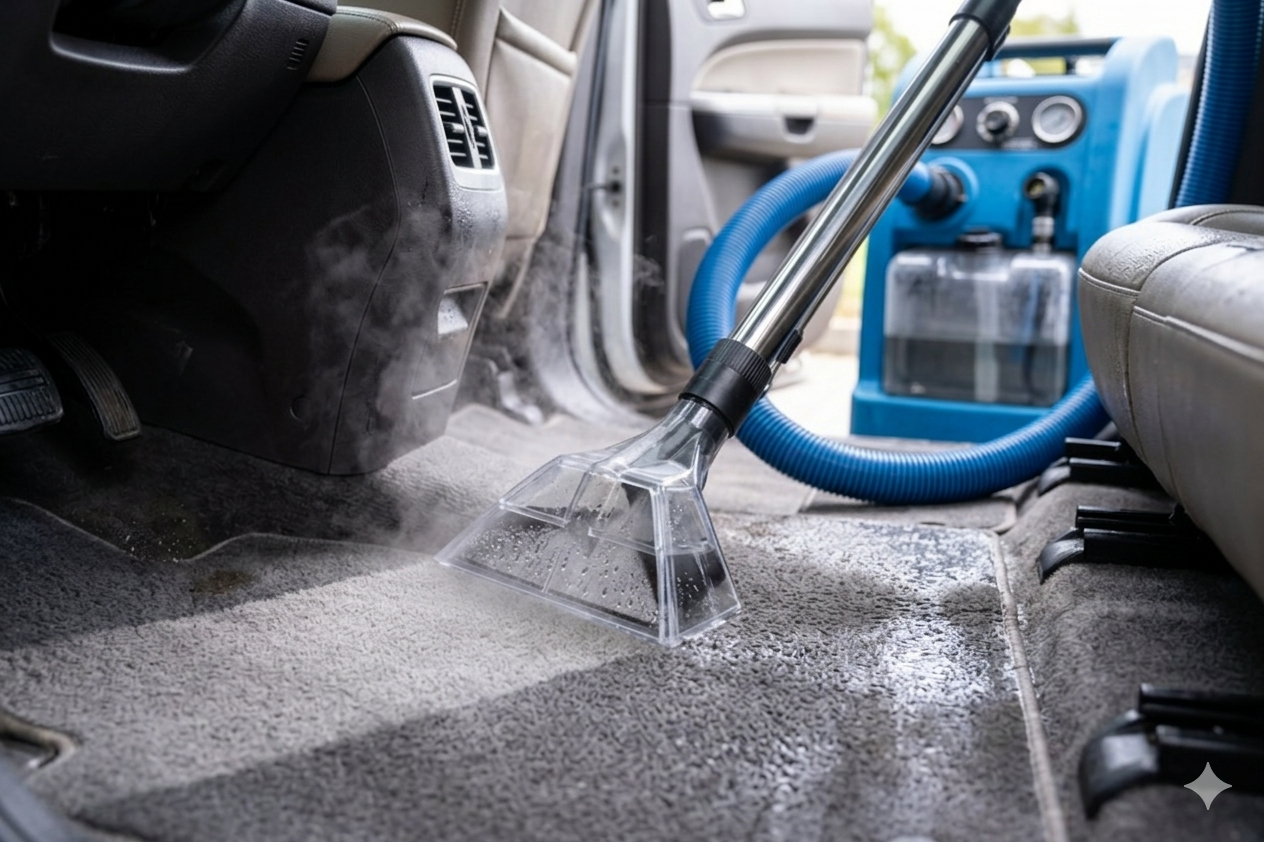
- Extract free water. A suitable wet-extraction machine can remove surface water, but an ordinary domestic vacuum must never be used on standing water.
- Arrange a hidden-moisture check. Large leaks may require access beneath the carpet or trim by suitably qualified personnel.
- Verify that the affected layers are dry. Odour sprays or a few hours with the doors open cannot establish that the underlay and floor pan have dried.
How professional vehicle interior drying works
The extent of drying depends on the water source, contamination and which materials are wet. A typical workflow can involve inspection, extraction, moisture checks, controlled airflow and dehumidification, followed by reassessment. Some seat cushions or underlay sections may need separate attention, and contaminated or permanently affected materials may need replacement rather than cleaning.
At Superbclean, our vehicle drying service in Melbourne focuses on moisture extraction and drying of suitable vehicle interiors. For a more general step-by-step overview, see our existing car drying guide.
Can you dry car seats without removing them?
Sometimes, but the answer depends on how deeply the foam is wet. Fabric covers can feel dry while cushioning remains damp. Professional extraction and airflow may help, but excessive heat can damage upholstery, adhesives or trims. Avoid disconnecting seat wiring, airbag plugs or powered-seat components yourself.
What about mould, disinfectants and ozone?
Drying the source of moisture is the first priority. Mould risk rises when porous materials stay damp; the exact timing varies with conditions. Heavy fragrance or deodorising products do not solve wet underlay. Cleaning or antimicrobial treatment should be selected for the material and type of contamination, not applied as an automatic cure. Ozone is not a necessary default treatment and should not be treated as a substitute for cleaning, removal of damaged materials or proper drying.
Will car insurance cover water-damaged carpets?
Cover depends on your policy, the cause of water ingress and the insurer’s assessment. Photograph the vehicle, retain any quotes and receipts, and ask your insurer whether an inspection is required before work starts. In a significant flood event, agree on the next step with the insurer and mechanic before booking interior restoration.
Frequently asked questions
Will a car’s damp smell disappear when it dries?
It may if the water source is fixed and all affected materials are cleaned and dried thoroughly. If the odour keeps returning, check the hidden underlay, boot and seat foam.
How long does it take to dry a wet car interior?
There is no reliable universal timeframe. It depends on how much water entered, which layers absorbed it, the ambient conditions and whether materials must be lifted or replaced. Moisture checks are more useful than guessing a number of hours.
Is it safe to drive a car after a flood?
Do not drive or restart a submerged or flood-affected vehicle until a qualified automotive professional has assessed it. Floodwater may have reached components you cannot see.
Need car carpet or underlay drying in Melbourne?
For a leaking-window or rain-soaked vehicle interior, call Superbclean on 0413 727 860 to describe where the water entered, how long it has been wet and whether any electrical systems may be affected. You can also email [email protected]. We can discuss whether professional interior extraction and drying is suitable or whether an automotive safety assessment should come first.